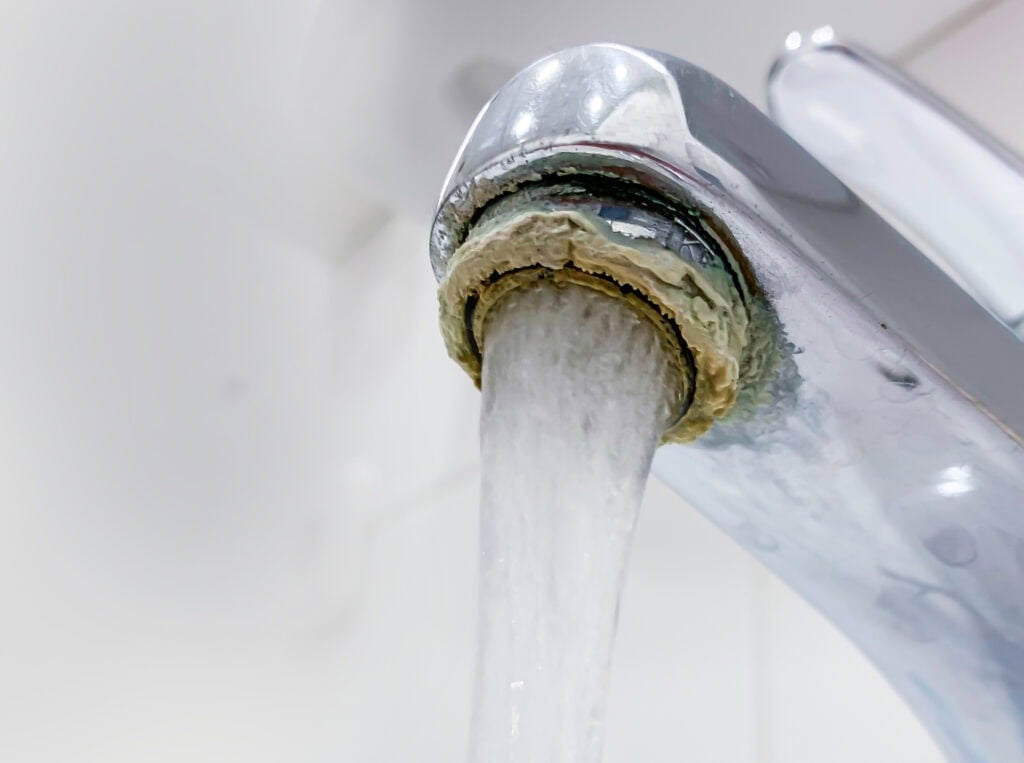
Limescale deposits on the tap are a well-known phenomenon that occurs over time. Not only do they look unattractive, they can also impair the flow of water and provide a breeding ground for bacteria and germs. The good news is that you don't necessarily have to unscrew the tap completely to clean it thoroughly. With simple household remedies and a few tricks, this can be done relatively easily. In this guide, we will show you tried-and-tested methods for cleaning your tap quickly, easily and hygienically. This will keep the water flowing evenly, the bathroom free of limescale stains and the tap functional in the long term.
Descaling the tap without unscrewing - effective methods for everyday use
The tap also includes the strainer or spout. This actually refers to the mixing nozzle, which is often also referred to as an aerator, aerator or aerator. Ultimately, this is the attachment on a tap from which the tap water comes. Limescale is usually the first to form on this mixing nozzle, which then impairs the water jet, among other things. There are various ways to descale a tap without unscrewing it - and this is easier than you might think. This is because stubborn limescale on the mixing nozzle, strainer or spout can be reliably removed without dismantling. With the right household products, such as vinegar essence, citric acid or even special descaling agents - for coarse deposits - this can be done effectively and thoroughly.
Cleaning a tap as a whole
Soak a soft cloth in a mixture of vinegar and water, for example, and wrap it around the tap spout so that the aerator is completely covered. Leave it to soak for a while - even overnight, depending on the degree of soiling. The vinegar dissolves the limescale, which can then be gently removed with an old toothbrush or sponge. This allows you to clean the tap thoroughly without having to use tools. Regular use prevents stubborn deposits and ensures that the water flow always remains even and powerful. As limescale builds up on the spout / aerator in particular, there are other ways to descale the tap without removing it:
- Balloon method:
Fill a balloon with vinegar essence or citric acid and place it over the tap. Allow enough water to run until the spout is completely covered. Leave it to work for a long time.
- Freezer bag trick
Instead of a balloon, you can also use a freezer bag of a suitable size. Fill it with the appropriate descaling solution, place it over the tap and secure it with a rubber band. Leave to soak as well.
- Descaling gel or foam
This product is specially available from specialist retailers. The advantage: It adheres to the surface for longer and can have a more targeted effect, especially in heavily calcified areas.
Unscrewing and descaling the aerator - a step-by-step guide
The aerator can also be cleaned effectively if you unscrew it from the tap. This is also an effective way of removing internal limescale and deposits. It is best to use a pipe spanner or tap spanner to unscrew the aerator. However, stubborn limescale can sometimes make the aerator difficult to remove. In this case, you should first pre-treat it with one of the methods described above. It should then be easier to remove. Then proceed as follows: Disassemble the aerator into its three components: Sealing ring, union nut and strainer. Make sure you close the sink drain beforehand so that no small parts can fall in. Place everything in vinegar essence or citric acid mixed with water for several hours and then gently remove all residues with a sponge or toothbrush.
Good to know: To prevent material damage, rubber seals and gaskets should never be soaked in vinegar or citric acid for too long, as they can quickly become porous.
Rotary handles & co. - they also need care
Over time, limescale can also build up on the outside of the tap and on the rotary handles or levers. This is often noticeable in that the controls are more difficult to operate or even get stuck. Of course, limescale is also visually noticeable as it appears on the surface in unsightly stains. This is when you need to take action. The first thing to do is to use a cloth soaked in a descaling solution to thoroughly clean the affected areas. Depending on the design of the tap, the balloon or freezer bag methods can also be used here. If necessary, you should repeat the process until the limescale has been completely removed and the handles and levers can be operated properly again. If all these measures do not help and the function is still restricted, the tap will need to be dismantled and then thoroughly cleaned or possibly even replaced. To prevent this, you should clean your taps regularly. At the latest when whitish limescale deposits become visible, it is time. A rule of thumb says: taking into account the water hardness level, a basic cleaning should be carried out at least once a year, but the mixing nozzles should be descaled more often. This is the best way to prevent stubborn deposits and functional impairments.
Materials that make the difference
The basis of every durable product is first-class material. In our large Range of taps and Washbasin taps we offer high-quality models that are made from corrosion-resistant, robust materials. Special anti-limescale coatings and easy-care surfaces ensure that limescale is less likely to build up on taps and also make cleaning easier. Our choice of materials not only guarantees an attractive appearance, but also consistently high functionality, even with heavy or daily use. In combination with our clear design standards and the aim of continuously improving sanitary fittings, we create taps and mixer taps that are both technically and aesthetically impressive - and add lasting value to private bathrooms and kitchens or public washrooms. When you choose Armatron, you benefit from first-class workmanship, modern designs and a wide selection - perfectly tailored to your individual requirements and needs. If you need advice, please contact us via the Contact form to our service team. To stay up to date, you can also subscribe to our Newsletter.